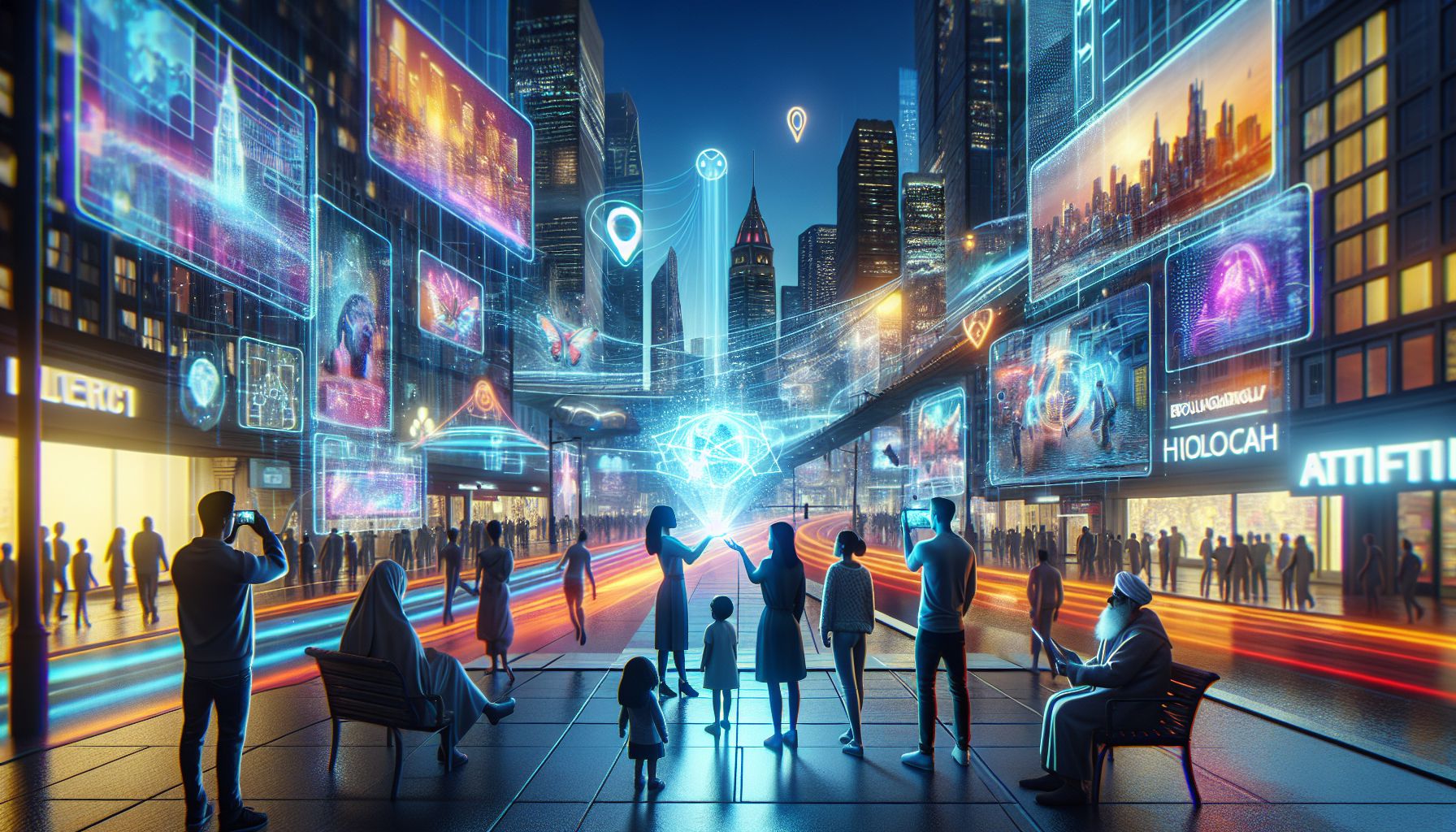
Hey there, fellow tech enthusiasts! Today, I’m diving deep into something I’m super stoked about—HoloReality. Okay, I may have made up that term, but bear with me. It’s what I’m calling the latest and greatest fusion between augmented reality (AR) and holographic technology. This tech cocktail promises to revolutionize the way we interact with our digital and physical worlds. Ready to geek out with me? Let’s dive in.
The Scenic Route to HoloReality
First, let’s talk a bit about how we got here. Augmented reality, as many of you know, is like that friend who always adds more glitter to an already sparkling outfit. Instead of completely replacing the world around you, like virtual reality does, AR just jazzes it up with digital elements. You might remember the Pokémon GO craze—yes, that was AR in action!
On the other hand, holography has been hanging around our science fiction dreams for decades. Think Princess Leia’s “Help me, Obi-Wan Kenobi” moment in Star Wars. Mind-blowing back then, and still quite a pipe dream for those of us who remember watching it on VHS. But now, with AR and holography coming together, we’re not far off from inviting a life-sized digital Leia into our own living rooms.
Recent Developments: A Love Story of Tech
Okay, so why am I so hyped about HoloReality right now? Because recent developments have been like watching your two favorite shows cross paths with a bizarre and delightful crossover episode. Companies like Magic Leap and Microsoft, with their HoloLens, have been paving the path for AR innovations. Meanwhile, startups focused on holographic displays, like Looking Glass Factory and Voxon Photonics, have been creating interactive holograms that don’t need 3D glasses. And the two fields are finally playing nice together.
The most exciting twist? Several new tech startups are integrating AR and holographic platforms into a single experience. Imagine your AR headset projecting 3D holograms that you can manipulate with your hands. As both technologies mature, the potential for more powerful integrations grows exponentially. It’s starting to feel a lot less like a gimmick and more like an inevitable step in our digital evolution.
Implications: Changing the Game
Now, let’s get into the nitty-gritty. What does this mean for us, the end-users of these technologies? First off, better immersive experiences. Imagine attending a business meeting where your colleagues are beamed in as holograms, never missing a beat in interaction. Or picture gaming that makes your living room the battleground, with characters leaping from your couch onto the coffee table.
Education and training are about to get a serious upgrade as well. Medical students could practice surgery on hyper-realistic holograms. Engineers might run simulations in 3D environments, solving problems on the fly in ways written instructions just can’t replicate.
Then there’s the creative arts sector. Artists can craft living paintings, musicians can create visual sound waves, and storytellers can immerse audiences in their narratives like never before. It’s a thrilling time to be a creator, right?
The Road Ahead: Challenges and Speculations
Of course, no epic tech journey is without its speed bumps. We’re talking about a massive amount of data processing, connectivity, and power requirements for rendering real-time, high-fidelity holographic images. Not to mention, the hardware. Sigh, headset fatigue is real, my friends. Finding ways to make these gadgets lightweight, comfortable, and affordable is a must.
Privacy concerns also loom large, as with any tech gathering personal data. How do companies ensure user data won’t be misused in an environment where you’re trying to replicate the feel of physical presence digitally? It’s a conversation worth having as we proceed.
Now, skating onto the speculation ice rink: Imagine having a digital assistant, a kind of holographic Siri or Alexa, appearing next to you, providing help and charm in semi-corporeal form. Or perhaps travel could take a backseat as more immersive communication diminishes the need for actual presence. Goodbye jets, and nature may even thank us for it!
Conclusion: Tech Dreams on the Horizon
In a world often hounded by dystopian narratives, technologies like HoloReality offer a glimpse into a future where digital and physical realms dance together in harmony. It’s up to our collective imagination, responsibility, and creativity to wrangle these exciting innovations and sculpt them into tools that enhance our lives. I, for one, can’t wait to see where this techno-utopian road takes us.
So, what does HoloReality mean for you? Are you dreaming of those interactive holographic adventures, or a professional world where holograms replace those tedious conference calls? Whatever your holographic fantasy, the future looks pretty wild from where I’m sitting. Until next time, keep dreaming and stay curious!